Wearable Art
My wearable textile works interconnect sculptures, clothing, and the body. Physical presence can be a political act in itself, especially in the age of instant digital communications. Drawing from Hélio Oiticica’s Parangolés and Lygia Clark’s sensory activations, these pieces require presence and movement to be activated. The body becomes a catalyst for dialogue, bringing ideas of love, belonging, and peaceful coexistence into the public sphere.
Influenced by Hélio Oiticica’s Parangolés, these works only come fully alive through motion, gesture, and collective experience. Presence becomes an energizing, loving, joyful catalyst for conversations - manifesting the phrase "If I can't dance, I don't want to be part of your revolution”. Defiance of rigid social norms is joined hand in hand with softness, color, and movement in each of these pieces.
Welcome Dresses
2024 - present
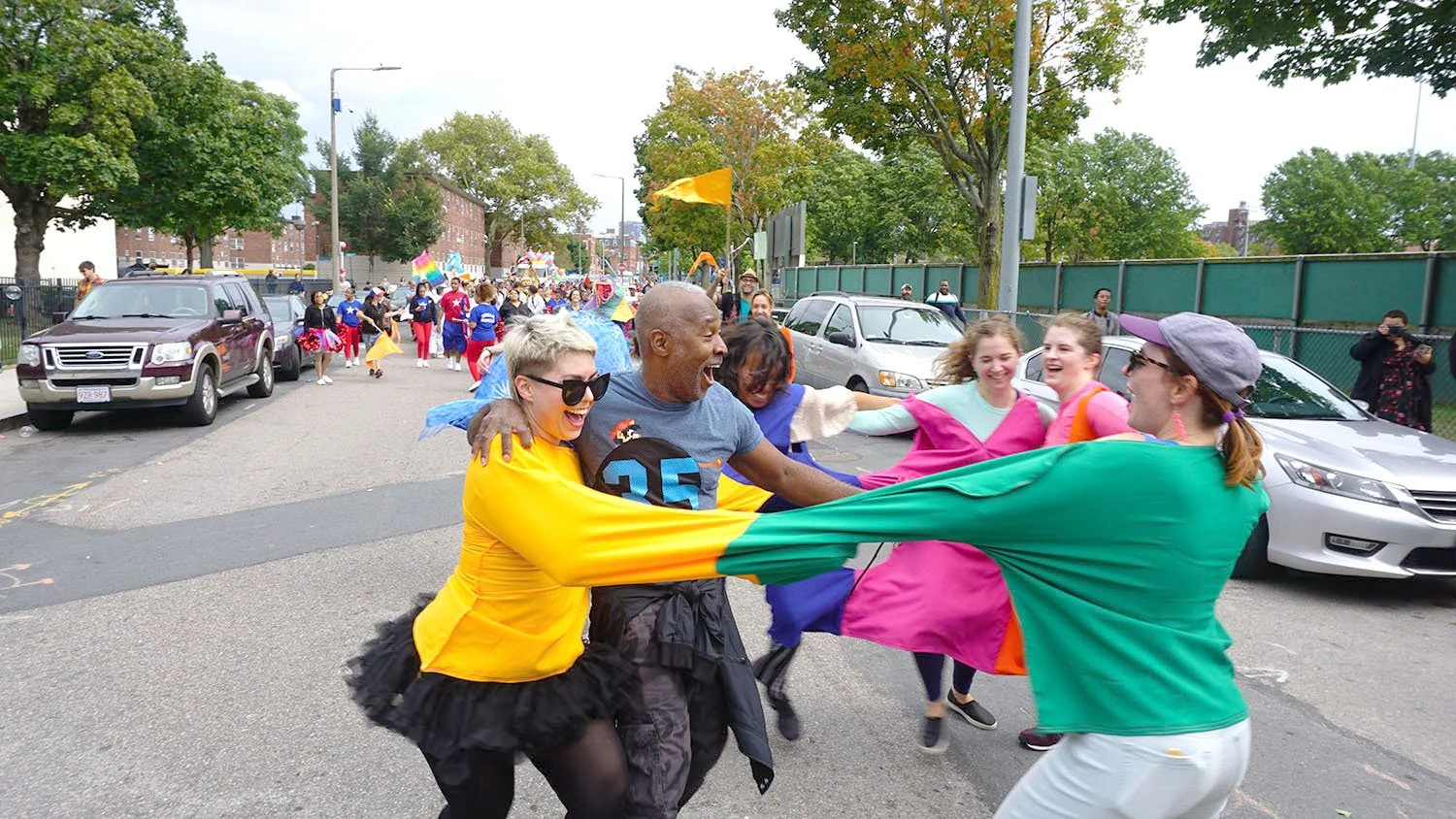
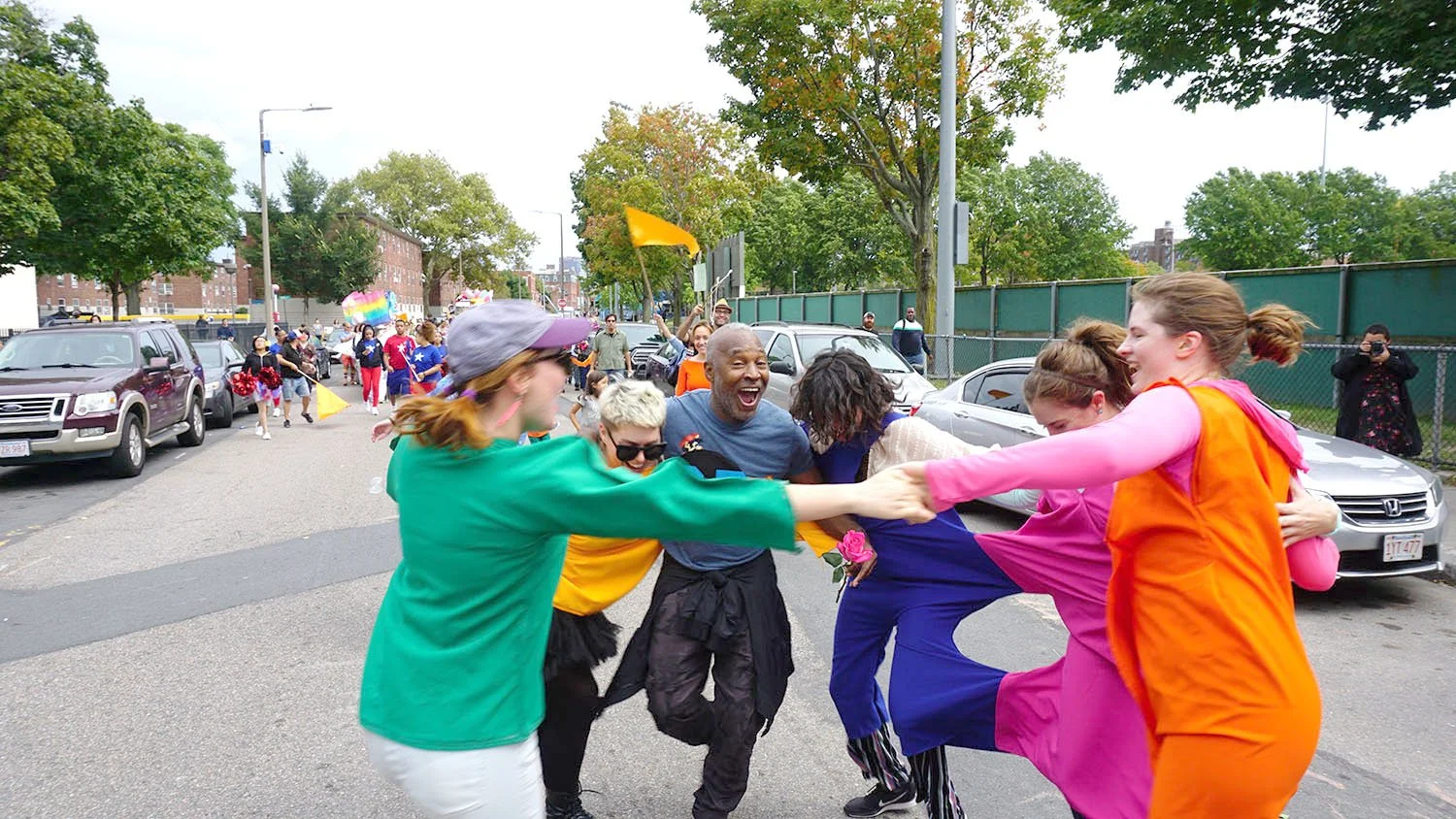
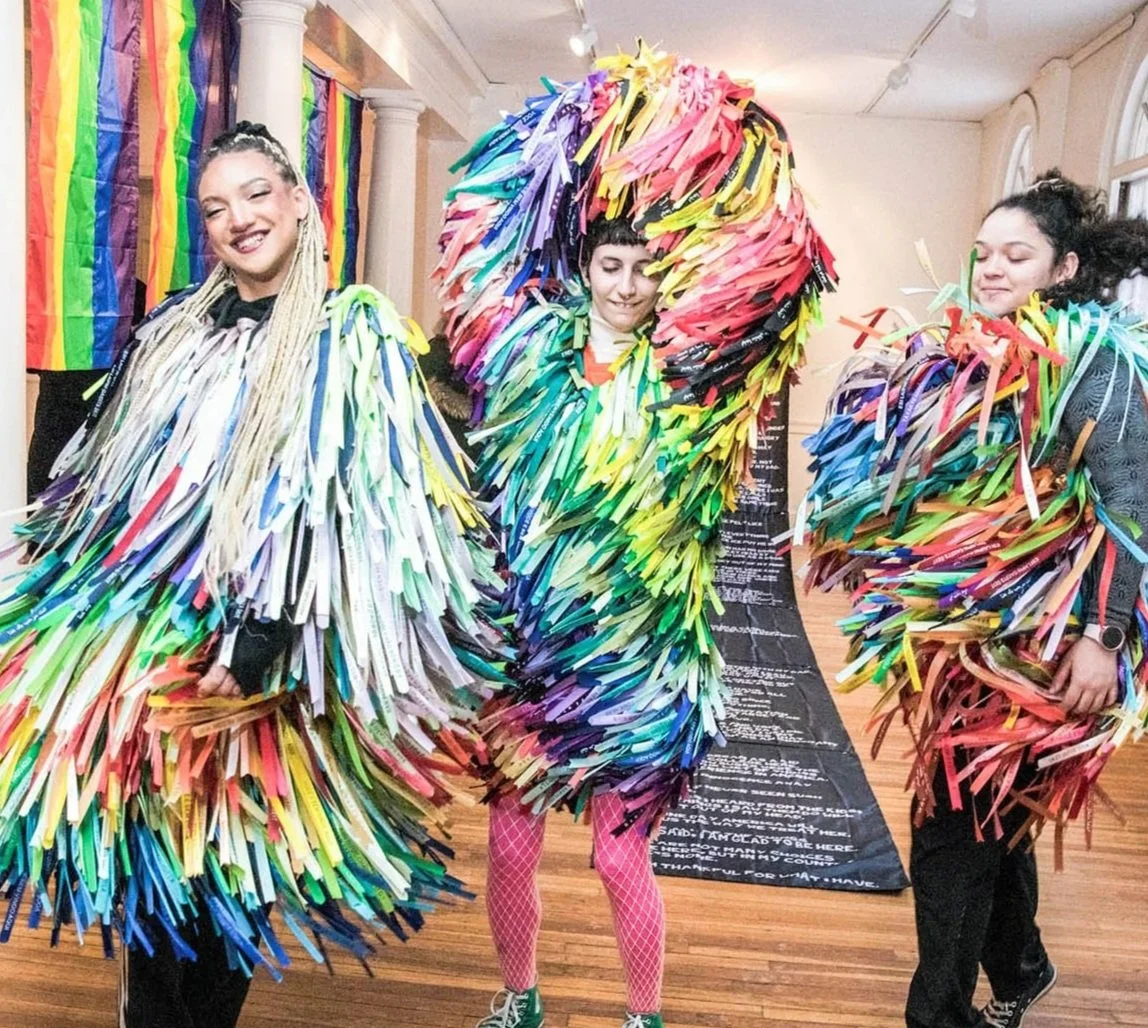
Mesh dresses and satin ribbons printed with the phrase YOU ARE WELCOME HERE in over 15 languages spoken by immigrant populations in the greater Boston area.
The Welcome Dresses embody the beauty and joy brought by immigrant cultures and diversity. Each dress is made with countless satin ribbons printed with the phrase YOU ARE WELCOME HERE in over 15 languages commonly spoken by immigrant populations of greater Boston.
Joy is Revolutionary!
If we listen and look closely, migration stories are primarily based on courage, self-improvement, seeking knowledge and opportunities, preserving different cultures and traditions, finding family, love, and creating richer, more diverse, colorful, musical, and beautiful communities.
Although hardship is often associated with these experiences, no person should be defined only by their sacrifice, suffering, and traumas. The welcome dresses are an embodiment of the joy brought by and experienced within immigrant communities.
This piece is part of the Social Fabric series of textile works.


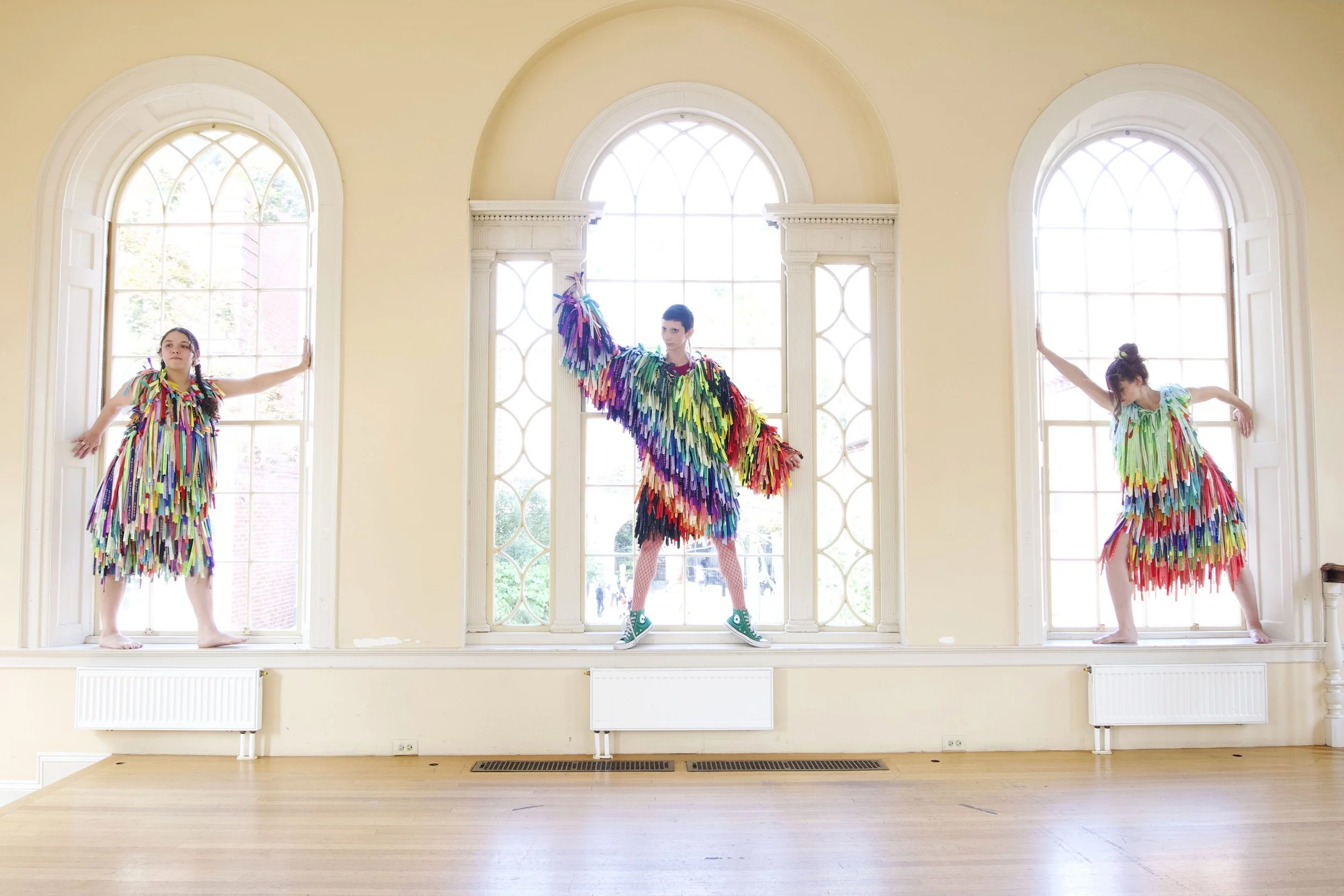
Medium: Mesh Dresses and custom-print ribbons with the phrase YOU ARE WELCOME HERE printed in several languages spoken by immigrant populations of greater Boston. Dimensions: variable approximately. 5x3x2ft each Year: 2024


Armor Dress
2019
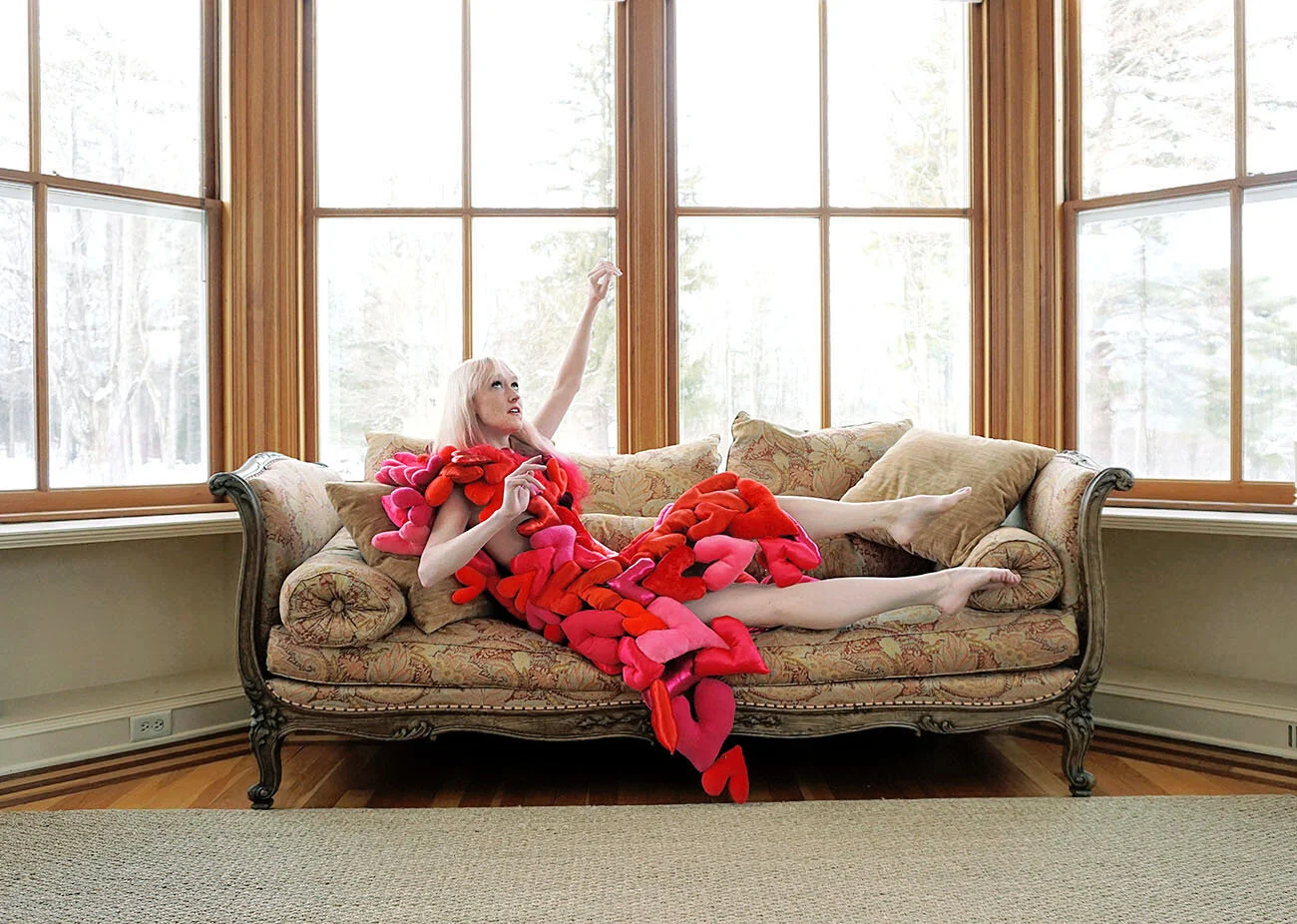
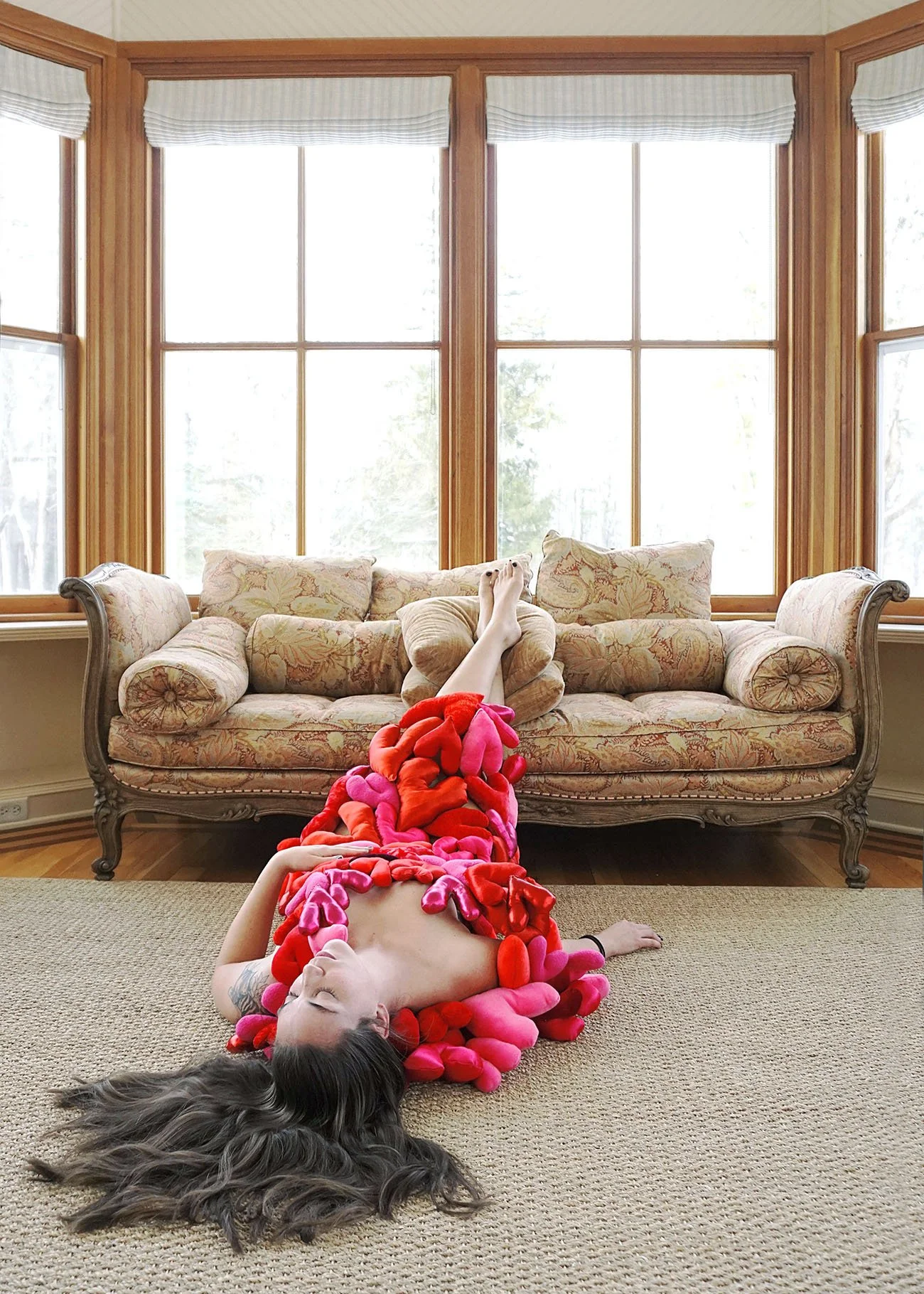
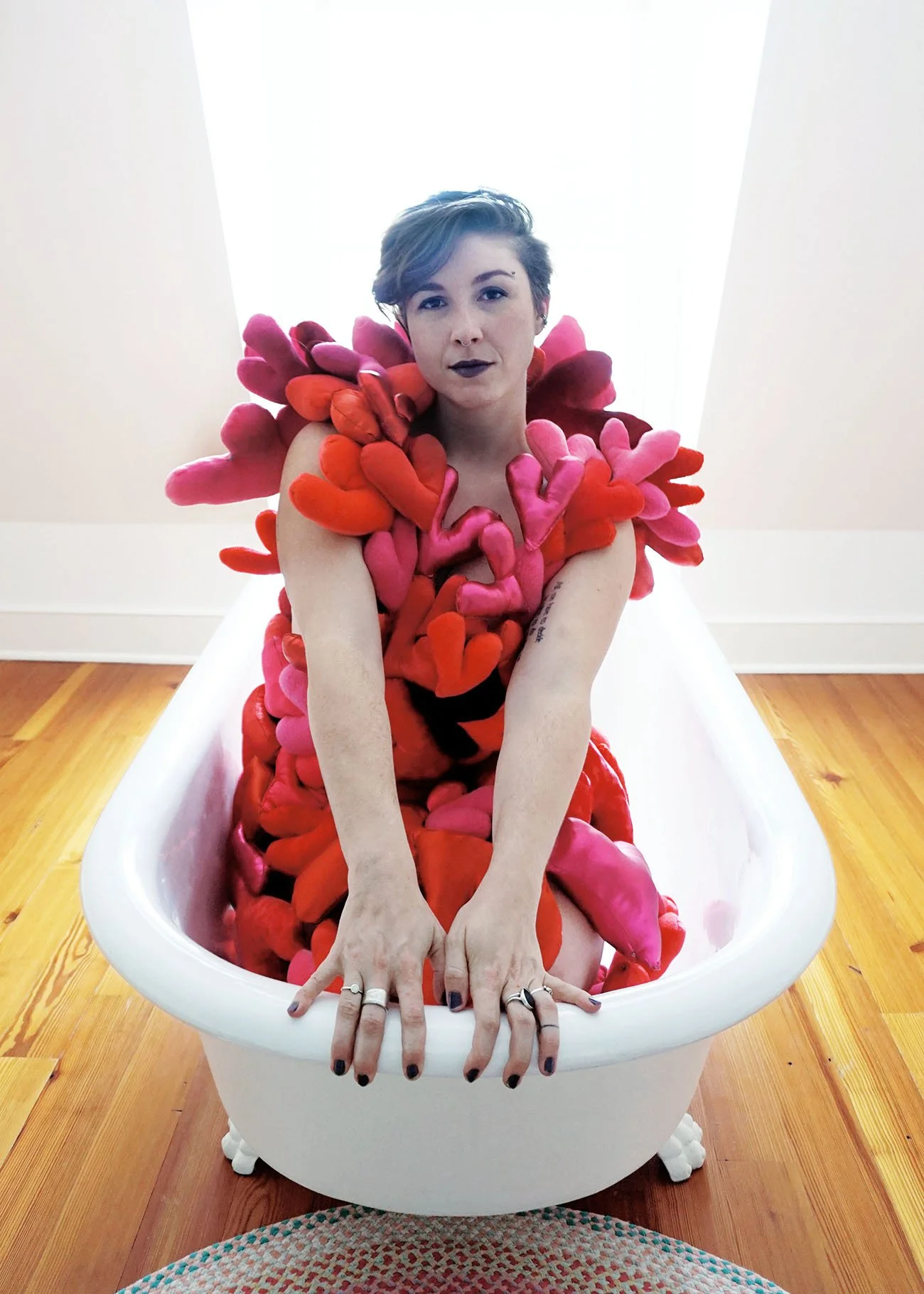
The Armor Dress materializes a soft armor to protect delicate bodies and complex ideas. In times when the political theater is used to crush our sense of freedom and choice toward our bodies and affections, the armor dress offers shelter in love. When one slips into a state of mind softened by love, it becomes easier to welcome empathy and compassion. The ideas around love continuously evolve and are expanded upon. The Armor Dress is a reminder that when a mindset of wonder, self-caring, and unconditional love is attained, we become stronger and more capable of coexisting and affecting change.



Embracers
2019
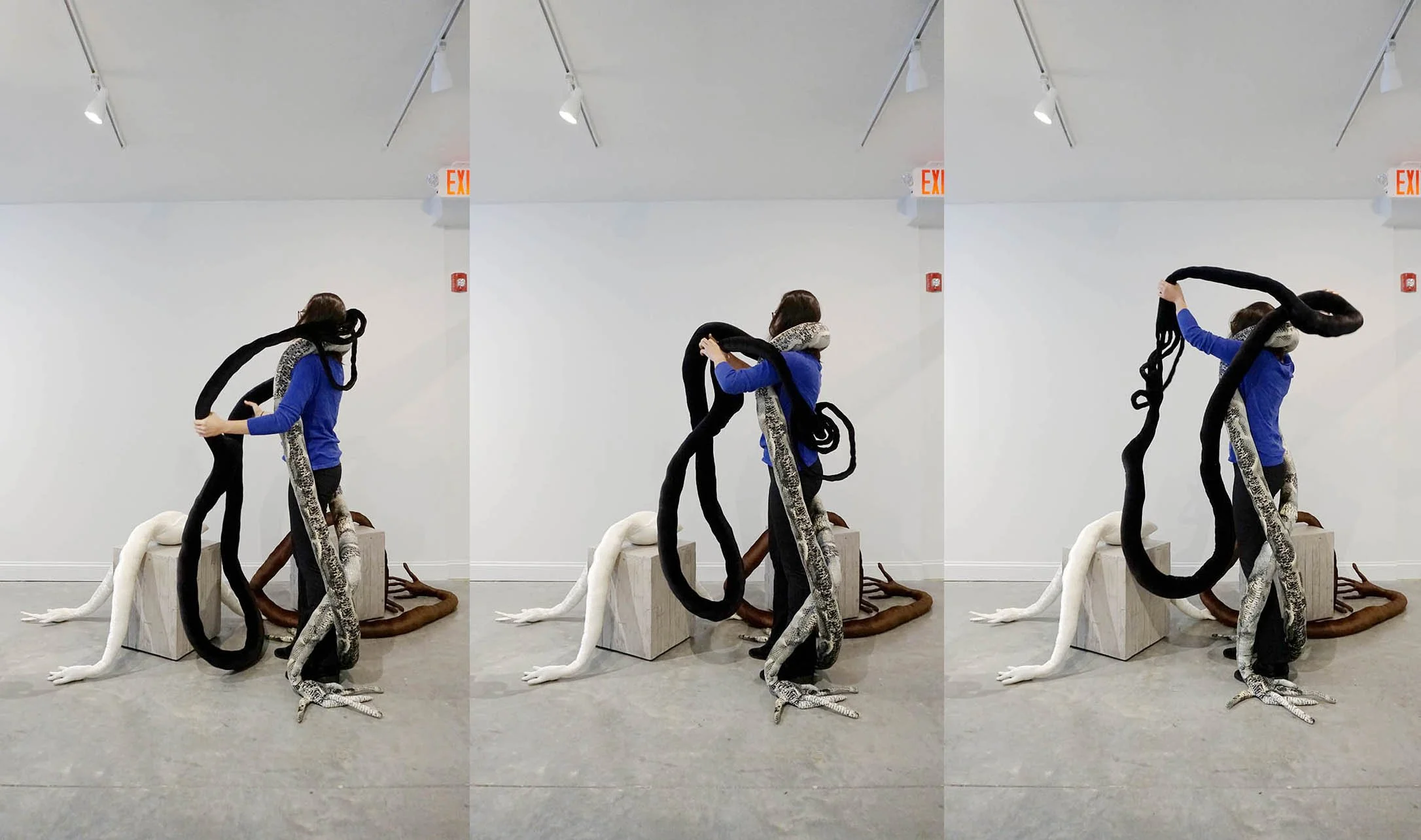
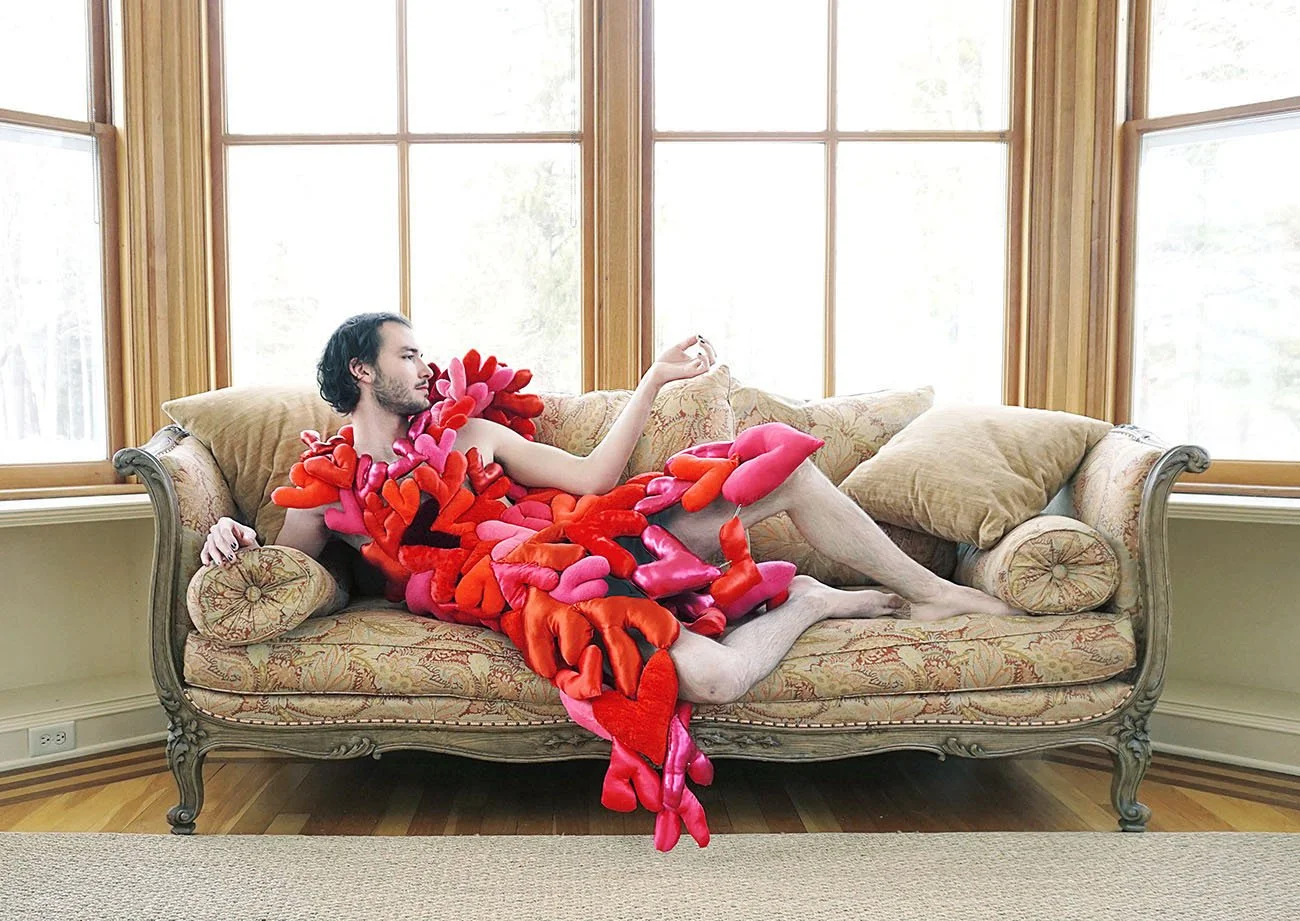
The Embracers are interactive sculptures that take a new form with every physical manipulation, inviting viewers to engage in moments of transgressive play, collective shelter, and joy during stressful times. Rooted in the spirit of Brazilian Carnaval, a collective state of catharsis, celebration of existence, and fierce political critique, the piece frames the acts of hugging, loving, and standing together as defiant political statements in response to ongoing political crises. Ultimately, the sculptures function as temporary autonomous zones that manifest a flicker of Carnaval’s sweet, glittery bliss, echoing the poet Ferreira Gullar's defiant sentiment: "Distraídos Venceremos" (Distracted we shall triumph).





ExXercise in Collective Balance
2004-2015

The piece consists of five garments bound together; once five people decide to wear them, they are physically connected for as long as they desire. There are no particular rules aside from being respectful and mindful of fellow participants and the surrounding environment, turning the simplest movements into a complex study of group dynamics, balance, and interdependence where every individual decision becomes a group negotiation. This work explores the movement and sensory aspects of human relationships, important subjects in Brazilian art history that echo Hélio Oiticica’s seminal, participatory "Parangolés." While Oiticica’s garments were fulfilled by a single body in motion, Exercise in Collective Balance shifts the priority to collaboration, requiring every participant to evaluate their personal choices while simultaneously taking into consideration the actions and input of the others involved.