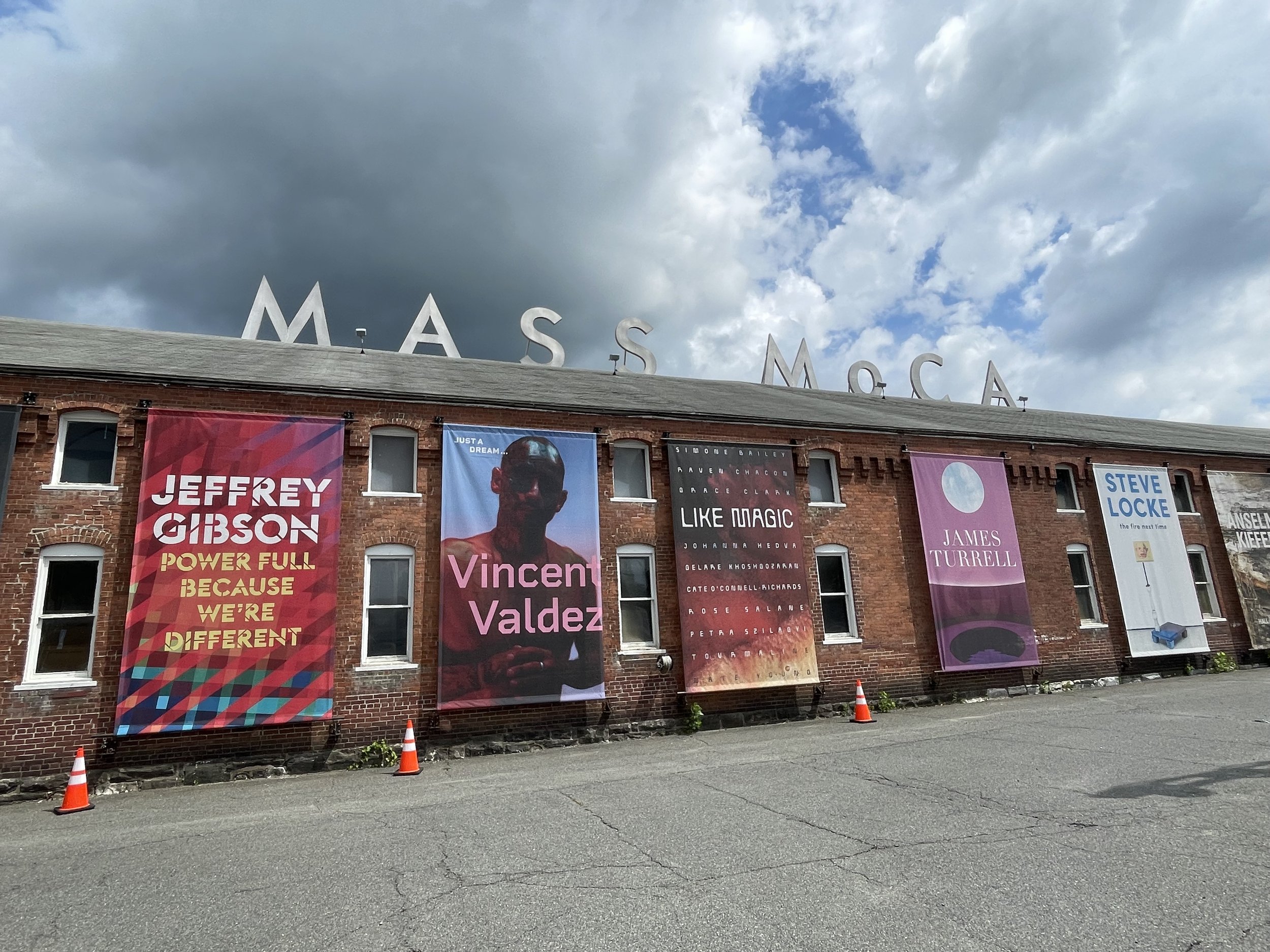
MassMoCA Assets for Artists Alumni Residency
July 16th to August 11th

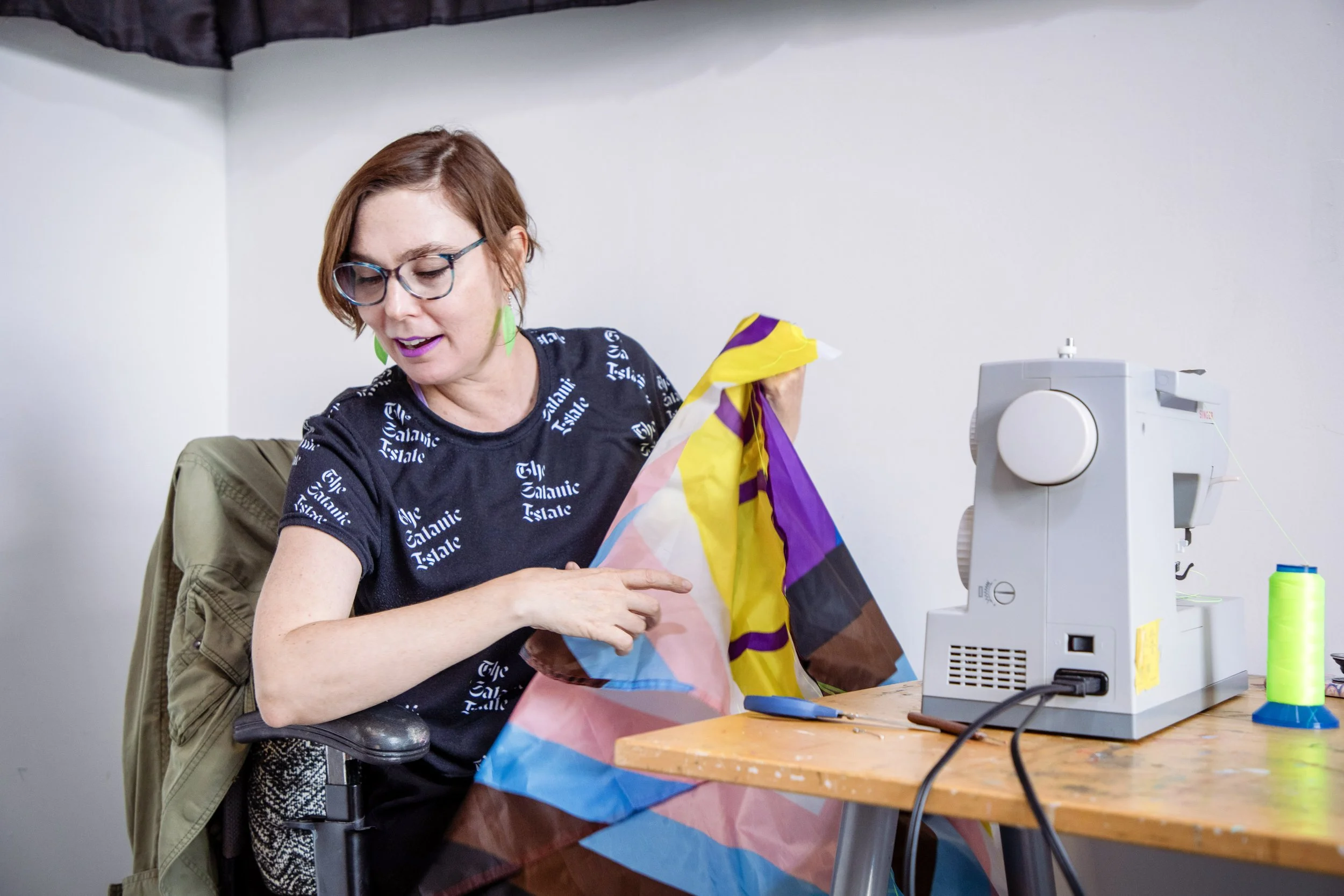
Photo by Inky
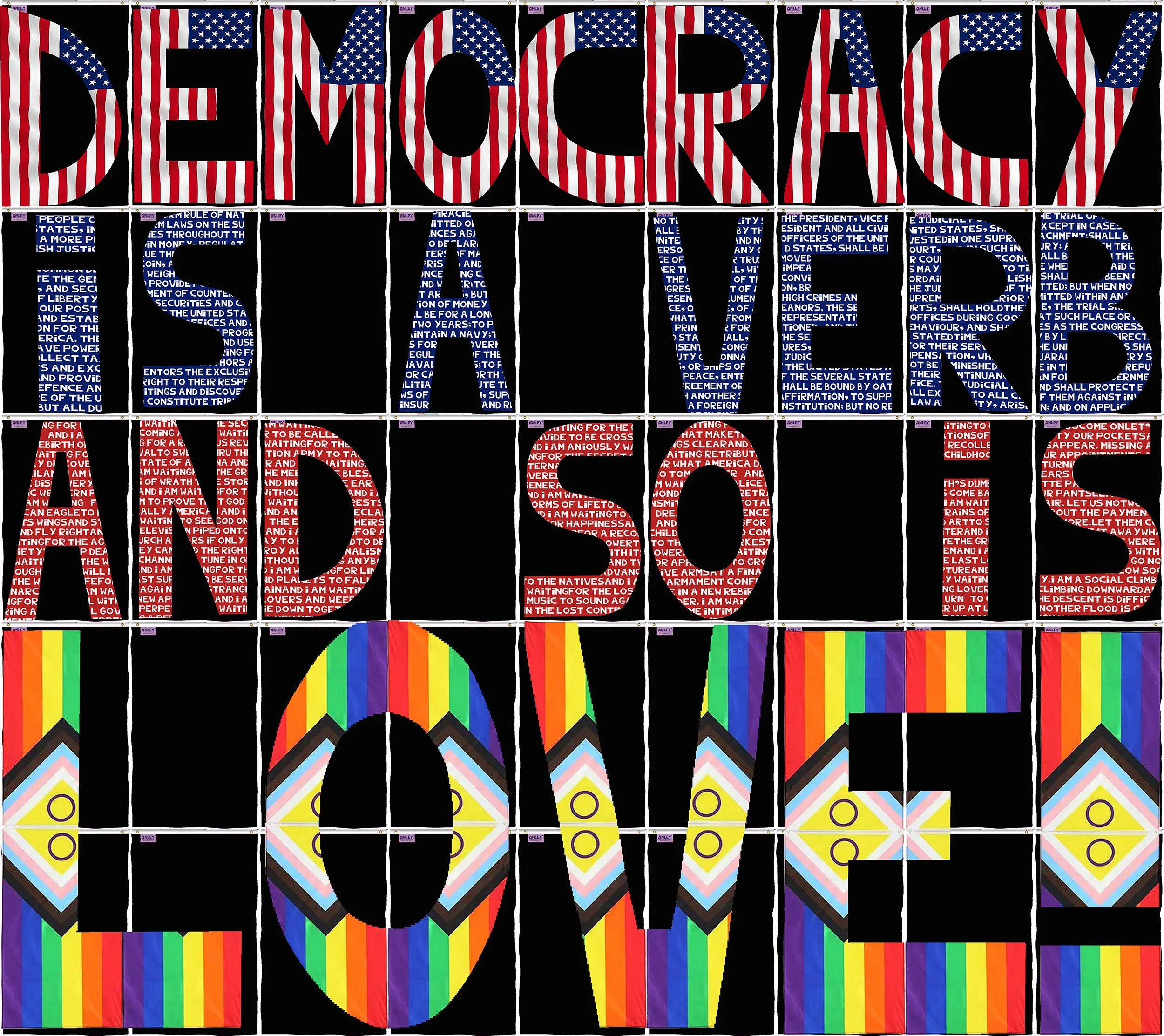
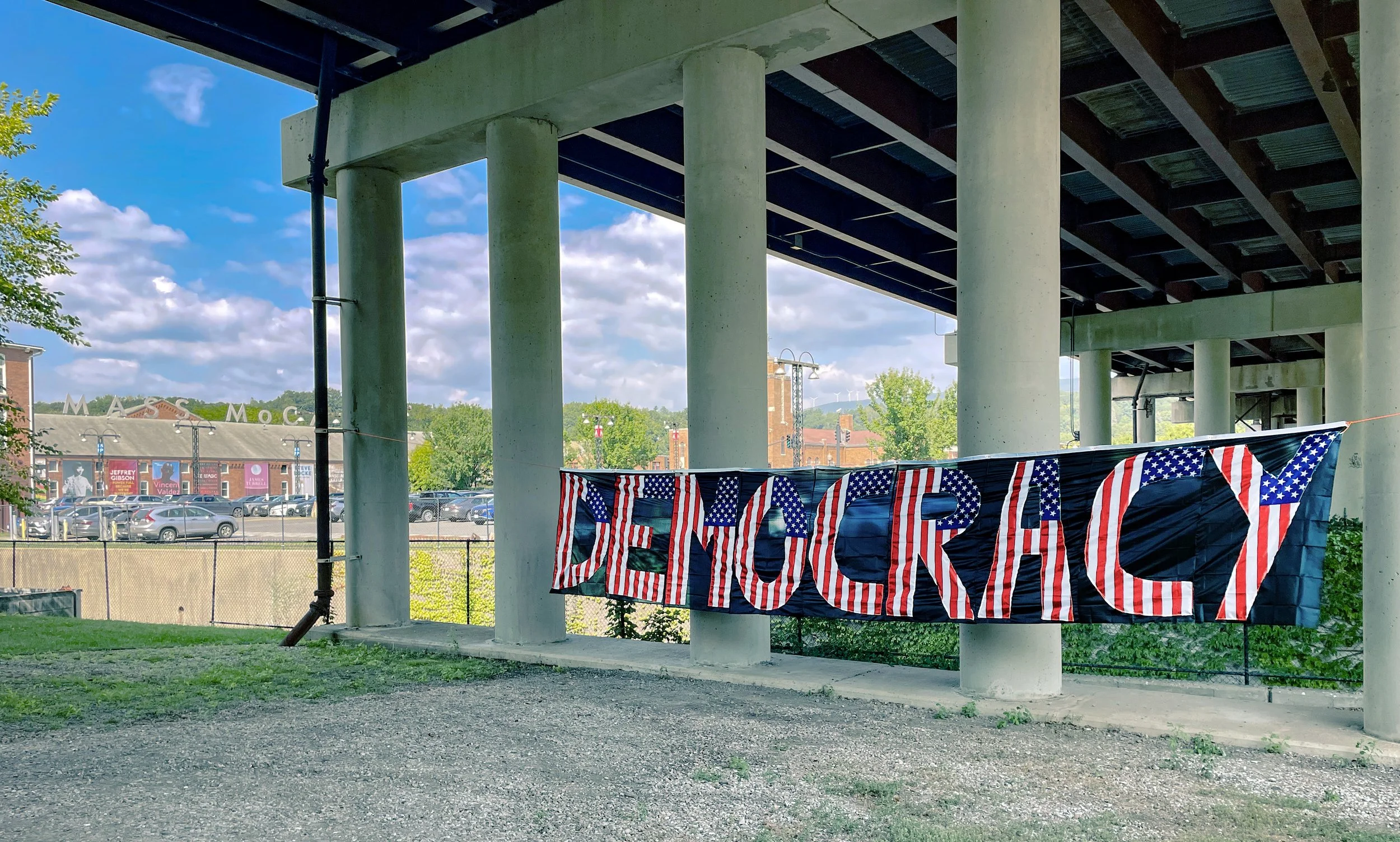
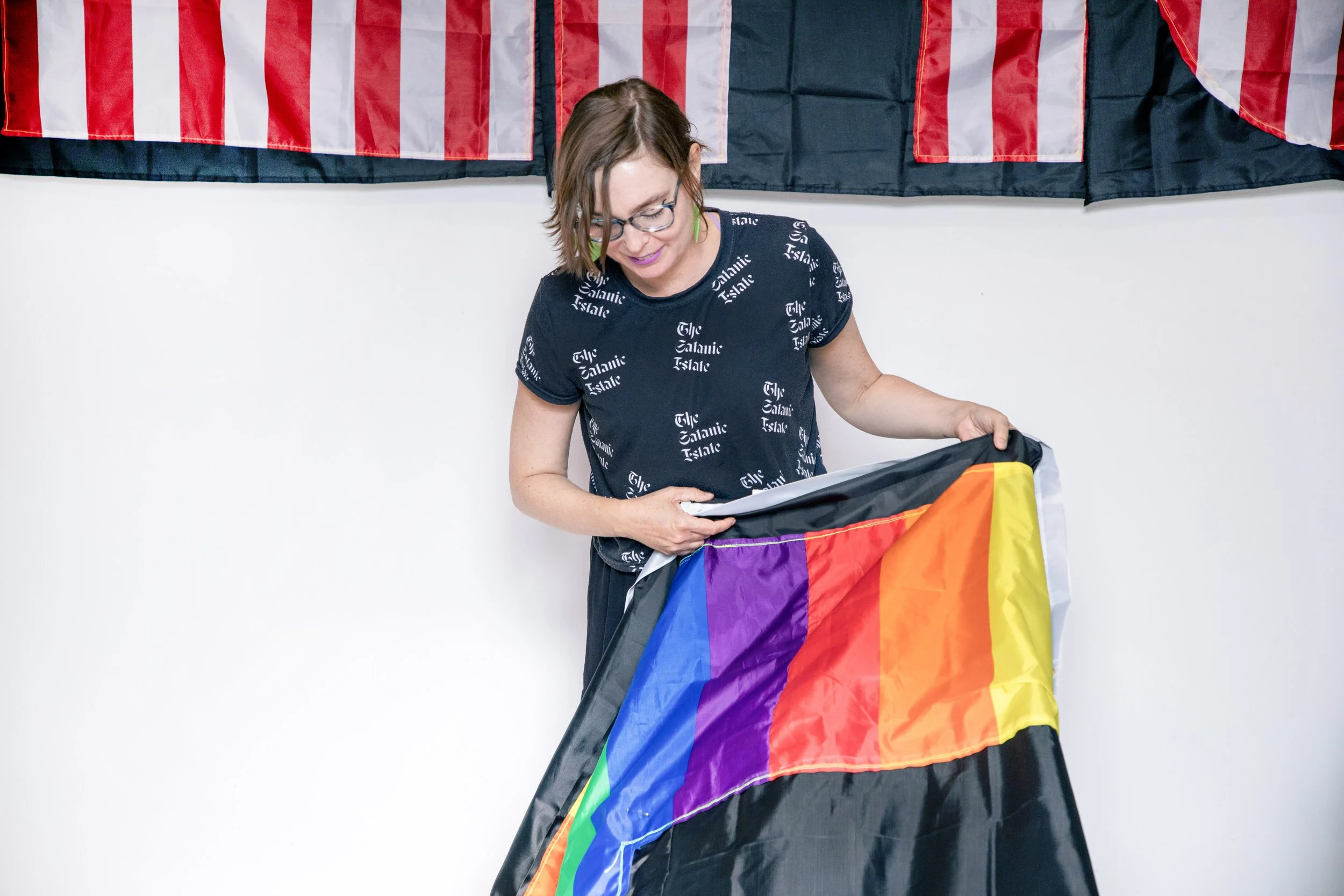
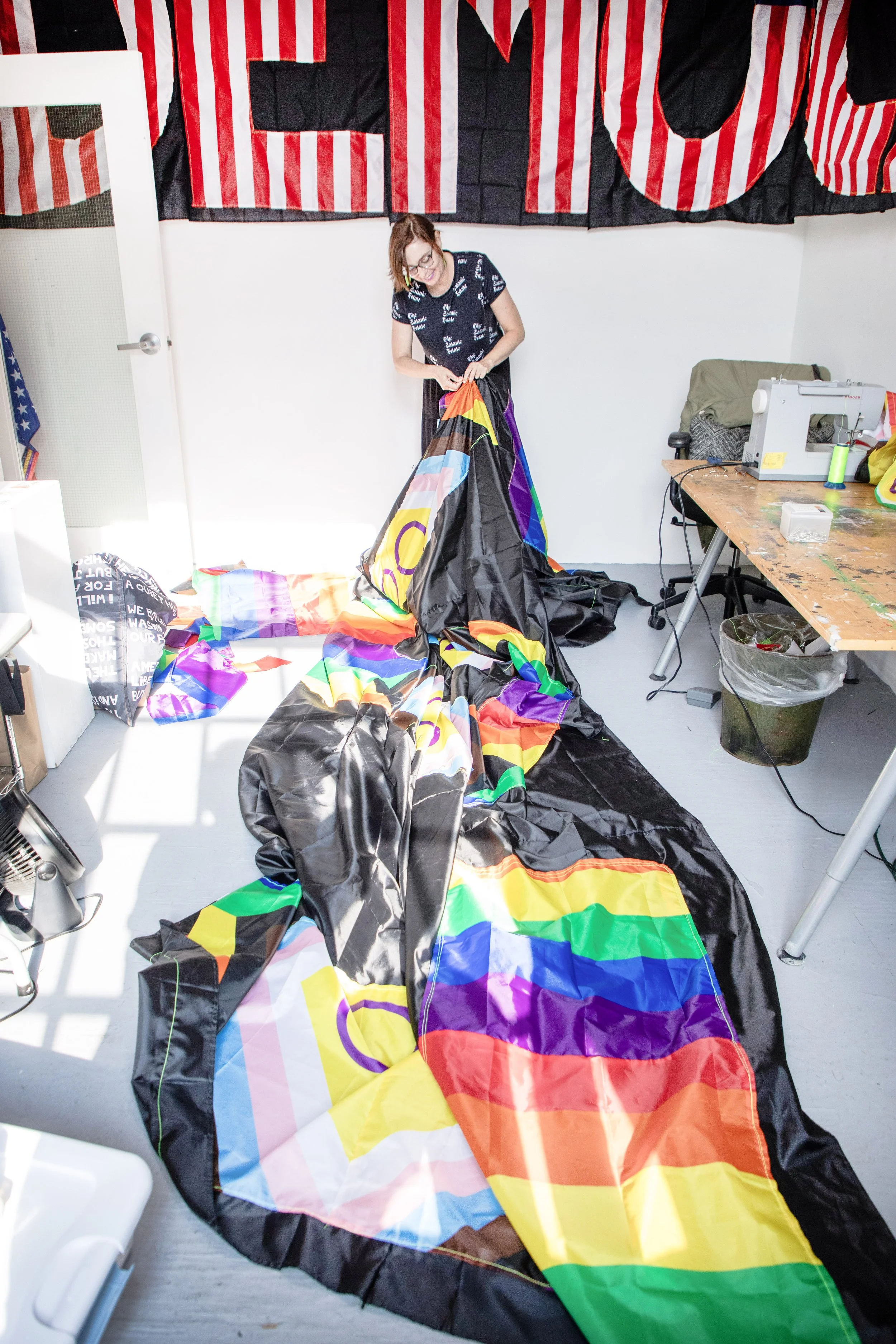
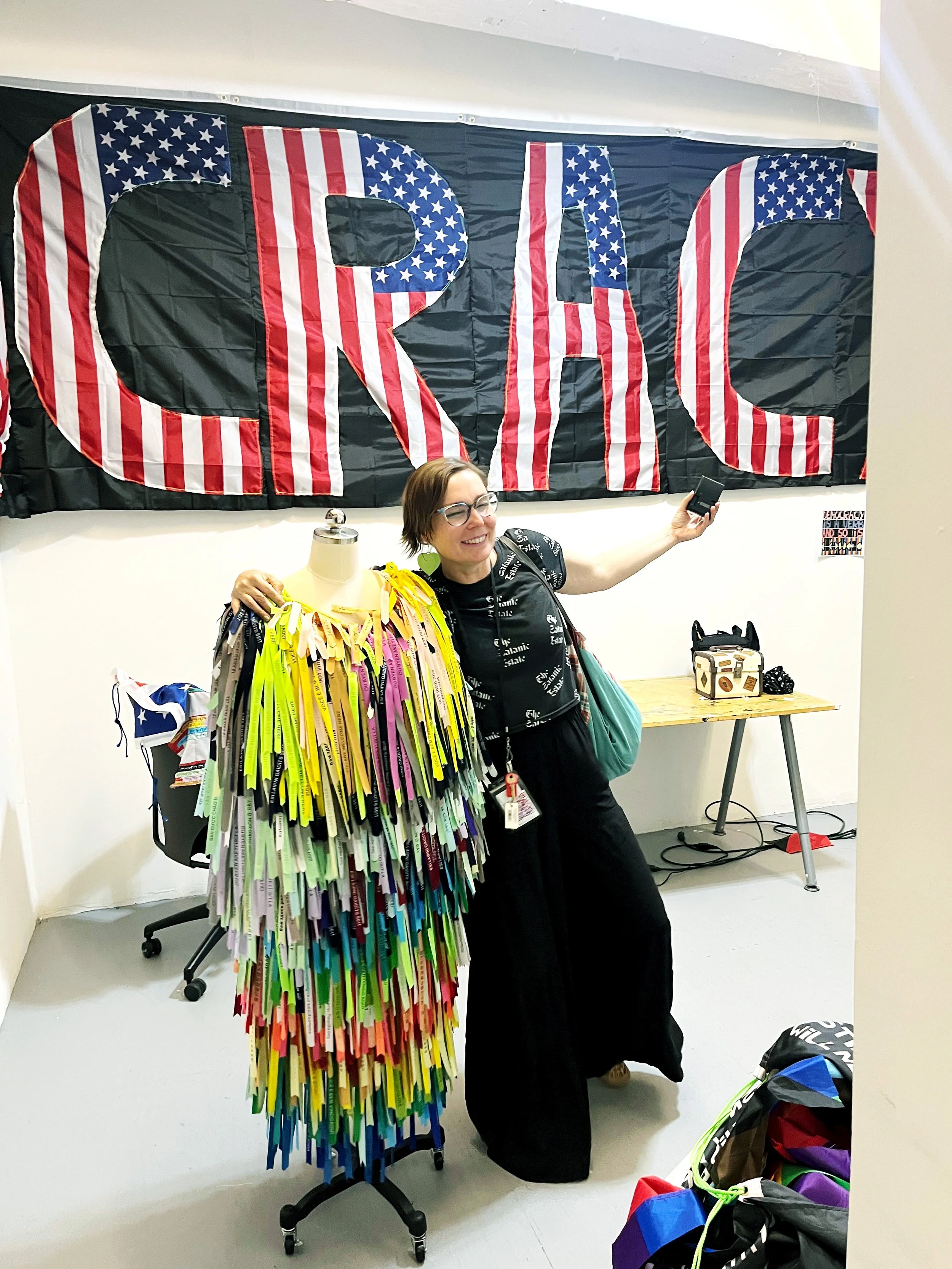
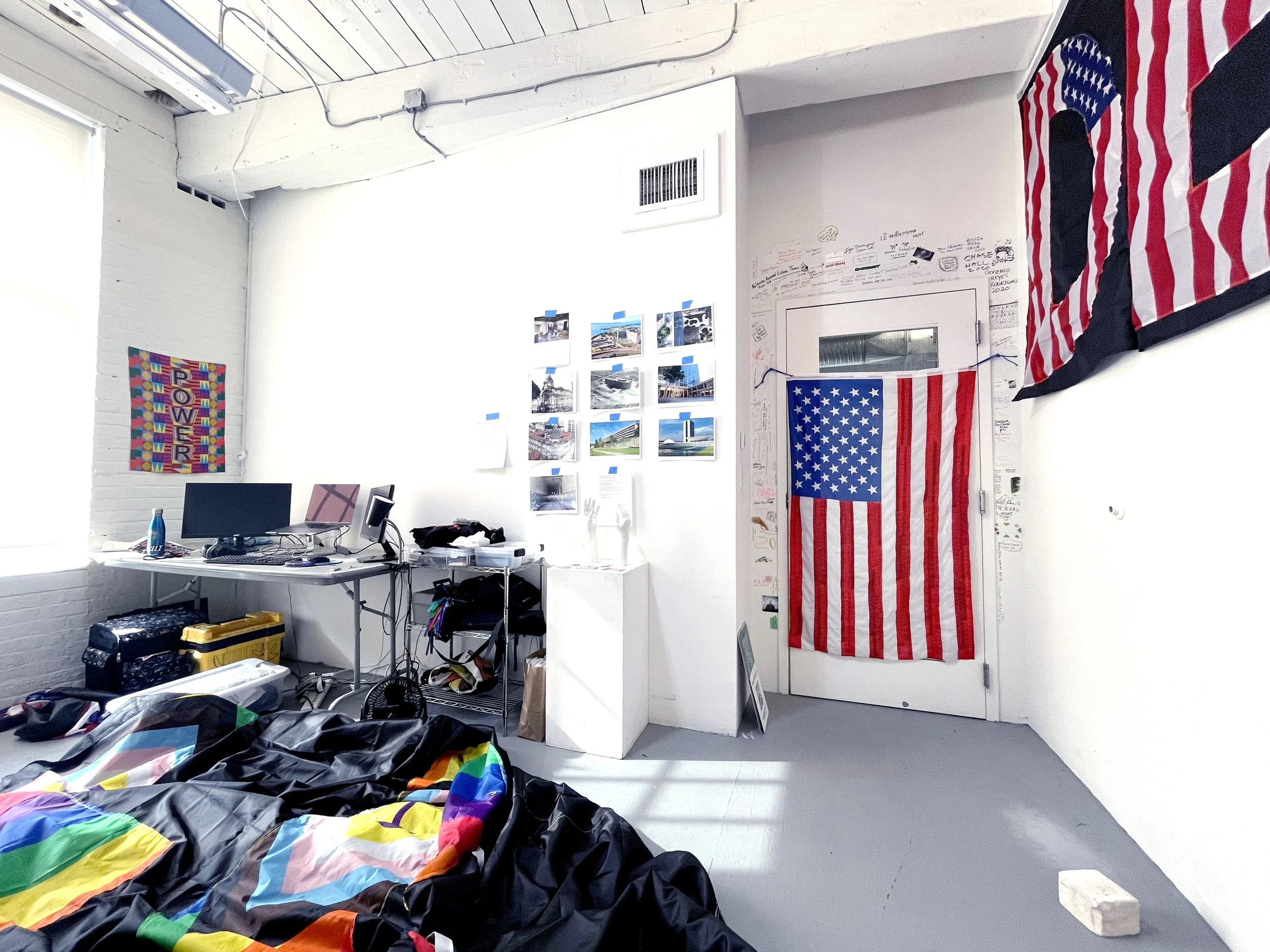
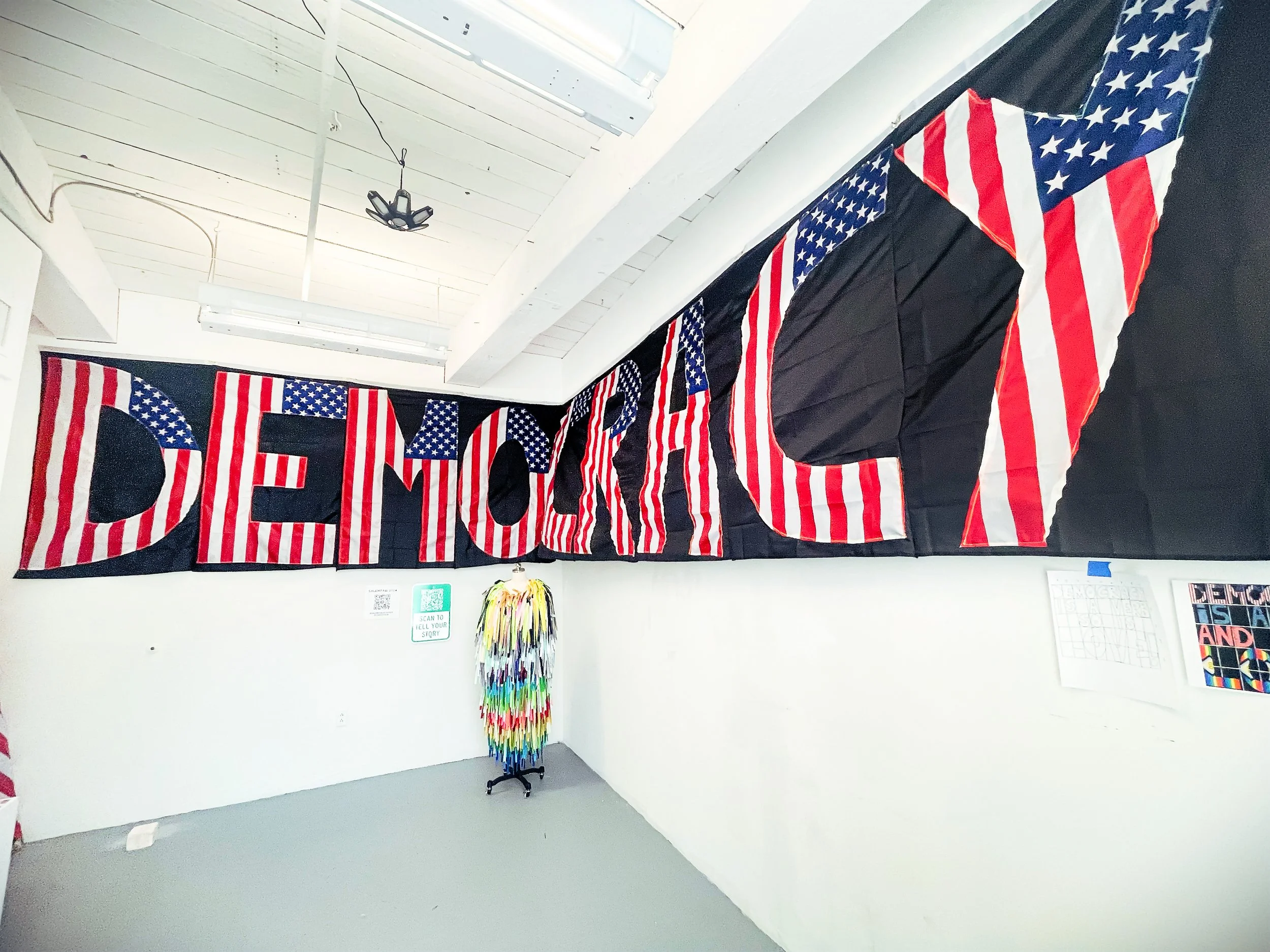
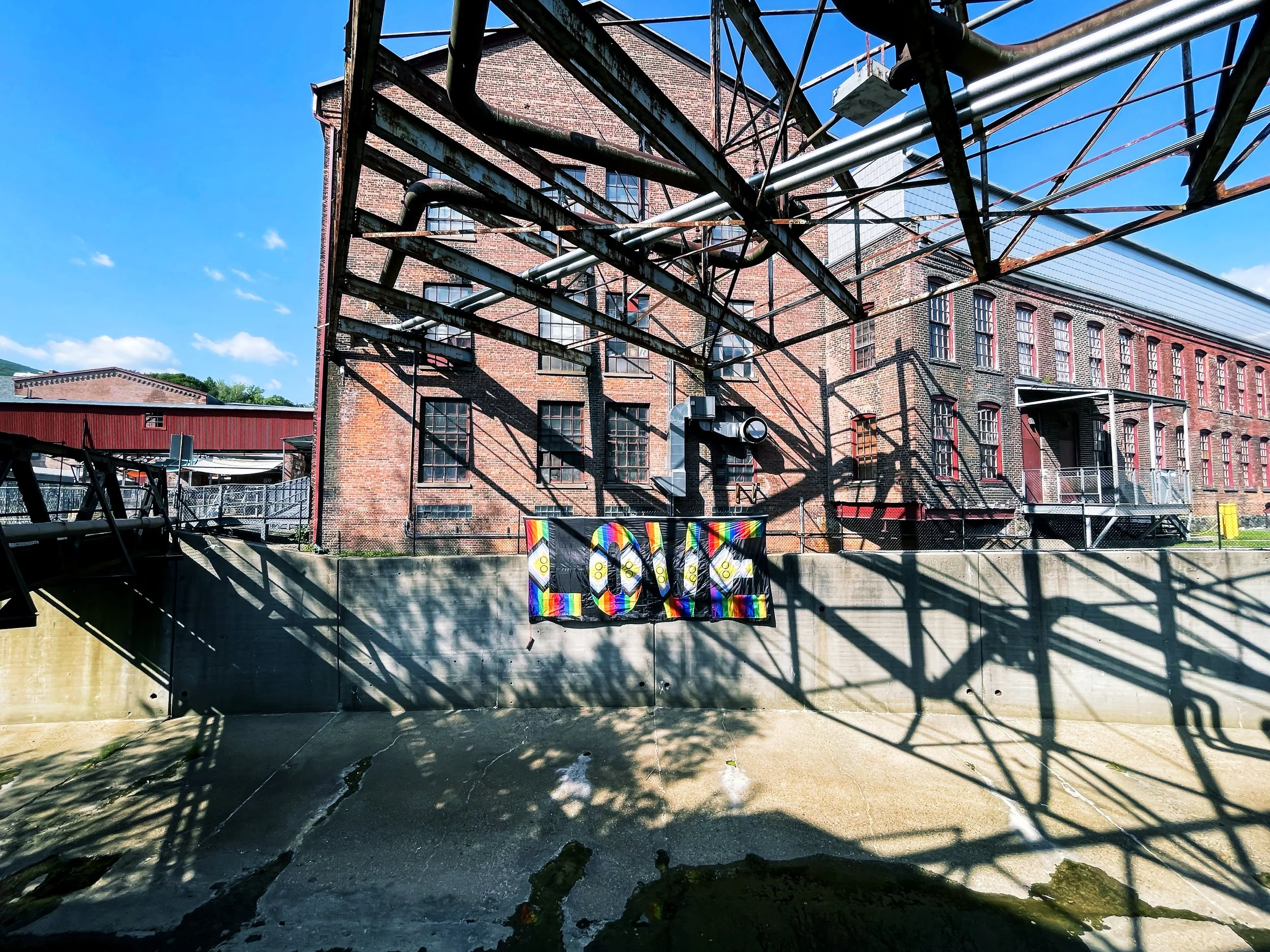
During my MassMoCA Studios residency, I explored scale through textile and flag works. The unfinished piece featured here includes custom print flags with excerpts of the Constitution alongside Lawrence Ferlinghetti’s poem “I Am Waiting.” A partial installation of DEMOCRACY IS A VERB AND SO IS LOVE on campus allowed me to experiment with its impact in a public setting. The residency provided an invaluable opportunity to see how the expansive MassMoCA environment accommodates site-specific, monumental work. This piece affirms what a flag represents both to its people and historically, inviting us to reclaim the symbol as a reminder that the work toward social justice, human and civil rights, and upholding democracy is never done and is a labor of love.

Social Fabric Solo show


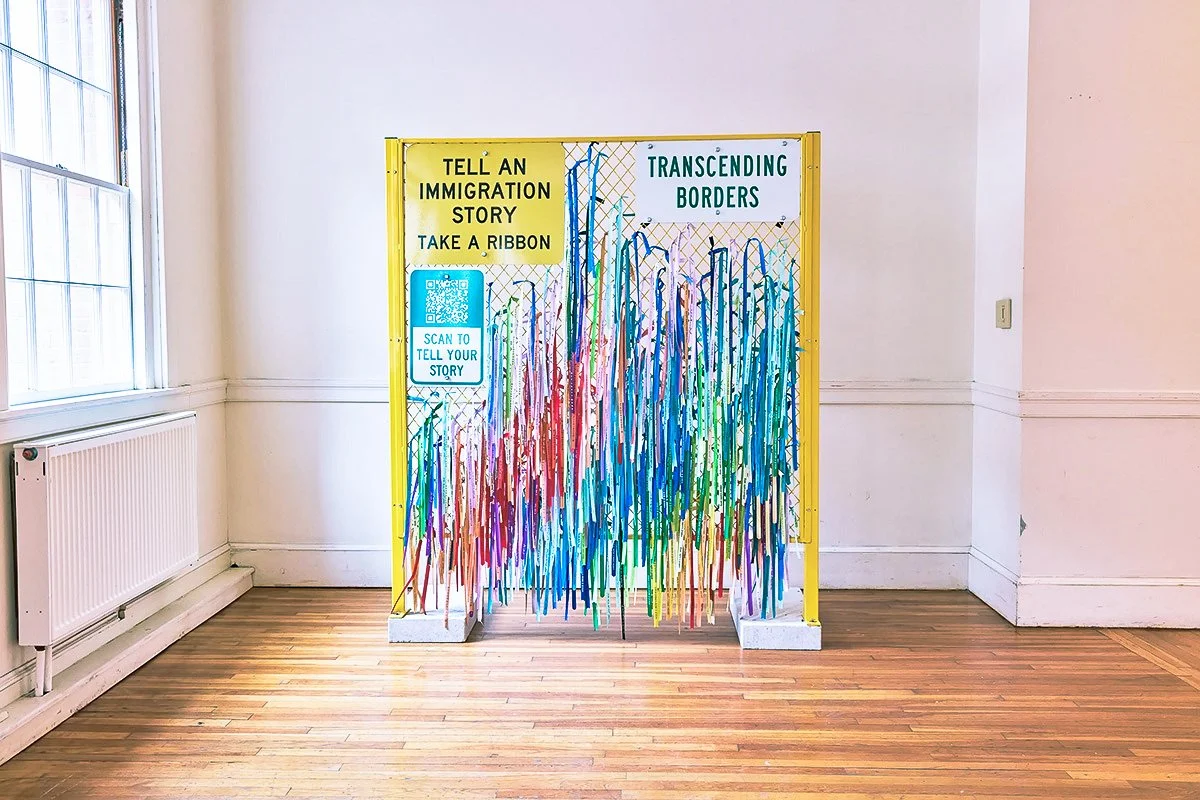
This exhibition, under the title Social Fabric, is the culmination of visual artist Julia Csekö’s eight-month-long Salem Public Artist in Residency program in 2024. The solo presentation features newly-created monumental textile work that responds to and engages with dozens of migration stories collected from local residents through the participatory public art installation Transcending Borders Immigrant Experiences and Dreams.

In addition, the exhibition showcases two video pieces created in collaboration with the Salem Access TV and premiered at the Salem Old Town Hall. The first time-based project consists of a series of interviews with members of local immigrant communities, and the second features three professional dancers invited by the artist to activate the Welcome Dresses, wearable pieces made of thousands of colorful satin ribbons printed with the phrase YOU ARE WELCOME HERE in fifteen languages commonly spoken by immigrants in greater Boston; these ribbons were distributed to the public during the residence period.
About the Curator Michaela Blanc
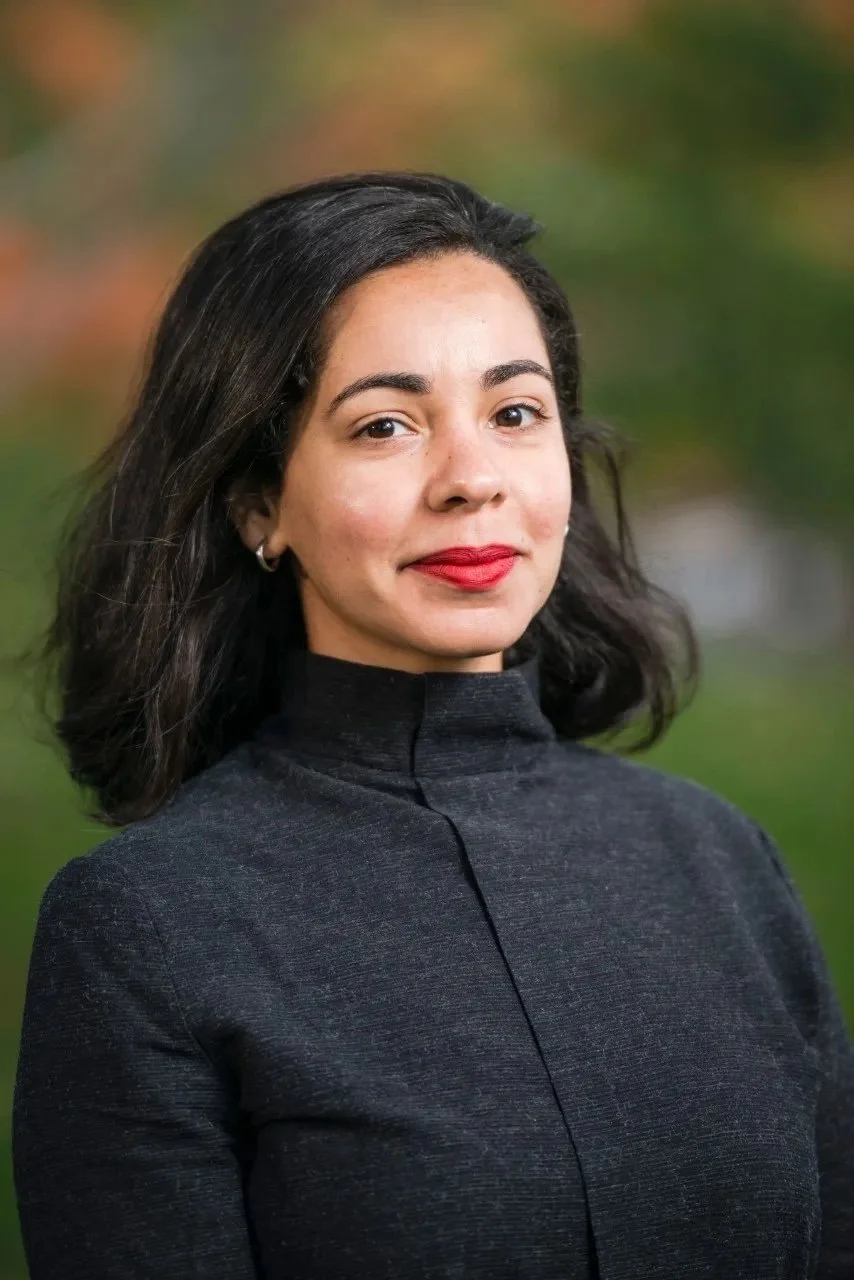
Blanc is the Wikimedian in Residence at the Pérez Art Museum Miami and a Leadership Advisor at Art+Feminism. She recently curated Adaptation – Local Notes at Tomayko Foundation and Adaptation Screening Program at Silver Eye Center for Photography, Pittsburgh. Previously, she was a Curatorial Fellow at the MassArt Art Museum (MAAM), a guest curator in the SMFA at Tufts University and MassArt Low Residence MFA programs, a Graduate Curatorial Fellow at the Museum of Fine Arts, Boston, and a curatorial intern at the Institute of Contemporary Art/Boston. She holds an MA in Museum Studies/Museum Education from Tufts University and a BA in Art History from the Federal University of Rio de Janeiro.

This program is partly supported by grants from the Salem, Marblehead, and Swampscott LCC, local agencies supported by the Mass Cultural Council, a state agency, and the ALAANA grant from the Creative County Initiative of the Essex County Community Foundation.

Photos by Dana J. Quigley, DJQ Media LLC


Partnerships
Why do people leave their families, cultures, languages, and countries behind?
The piece POST CAPITALIST DREAMS is my takeaway from eight months immersed in the topic of immigration through conversations, interviews, and collecting testimonies from the general public. The buzzword "immigration" is used to simplify a global scenario of instability, inequality, and abysmally widening wealth gap.
The phrase invites us to think freely and dream about better ways to organize and exist collectively.
In most cases, immigration is not a choice, but a necessity. "Seeking opportunity" is usually tied to fleeing a country ravaged by poverty, violence, and corruption, a country destabilized and drained by colonial and imperial practices. Immigrants contribute to a developed country's social structure - often as the base of a social pyramid.
Education at the center of it all!
A topic that came up repeatedly was education. Many immigrants come to the USA seeking learning opportunities, often without a plan to pursue citizenship. Many testimonies speak of social responsibility and giving back to their newfound home, especially once the pursuit of citizenship is involved.
The North American educational system is far from perfect, yet it attracts people from across the globe seeking to be the best versions of themselves through learning.
Resilience that often goes unnoticed.
Another common topic is a sense of resilience from having no immediate safety net, family, or friends to help overcome the hard moments. Every immigrant has gone through a process of reinventing their sense of self, family, and home.
Joy is Revolutionary!
If we listen and look closely migration stories are majoritively based on courage, self-improvement, seeking knowledge, and opportunities, preserving different cultures and traditions, finding family, and love, and creating richer, more diverse, colorful, musical, and beautiful communities.
Although hardship is often associated with these experiences, no person should be defined only by their sacrifice, suffering, and traumas. The welcome dresses are an embodiment of the joy brought by and experienced within immigrant communities.
Virtual Tour
opening

Photos by Derek Kouyoumjian


Many hands make light work
2024 to present
Stills by Fabian Alvarez and filmed by Bento Marzo
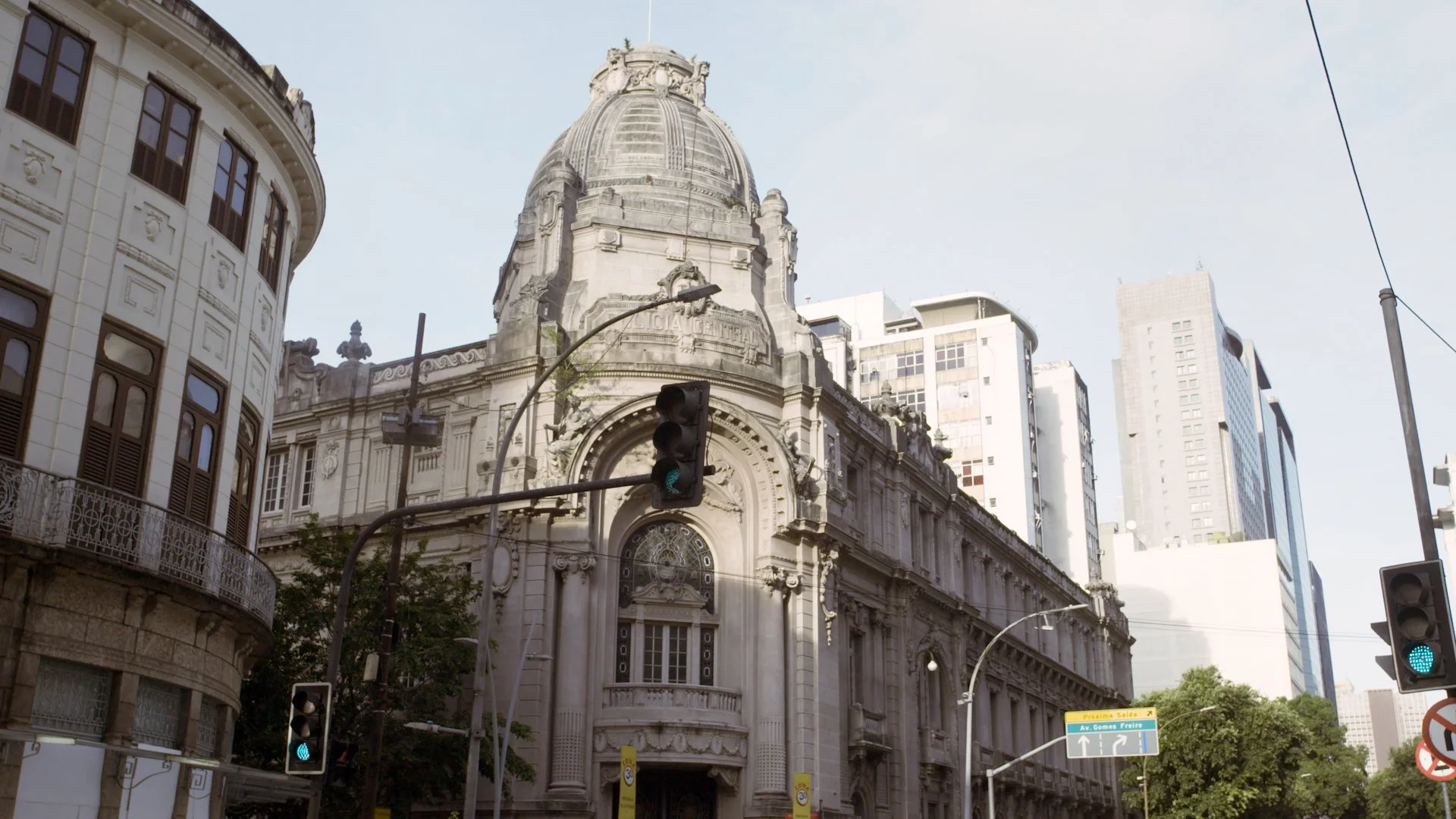
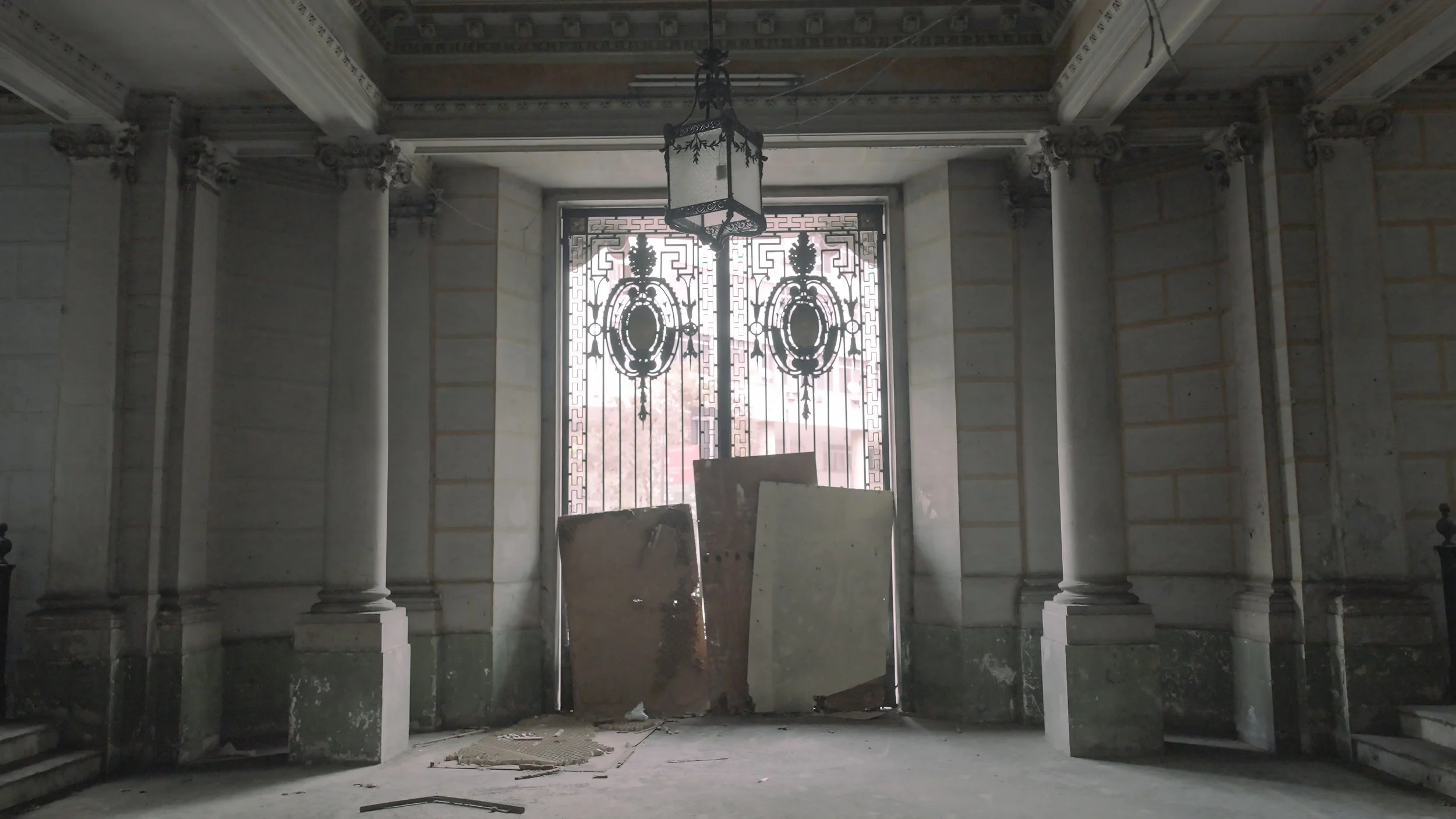
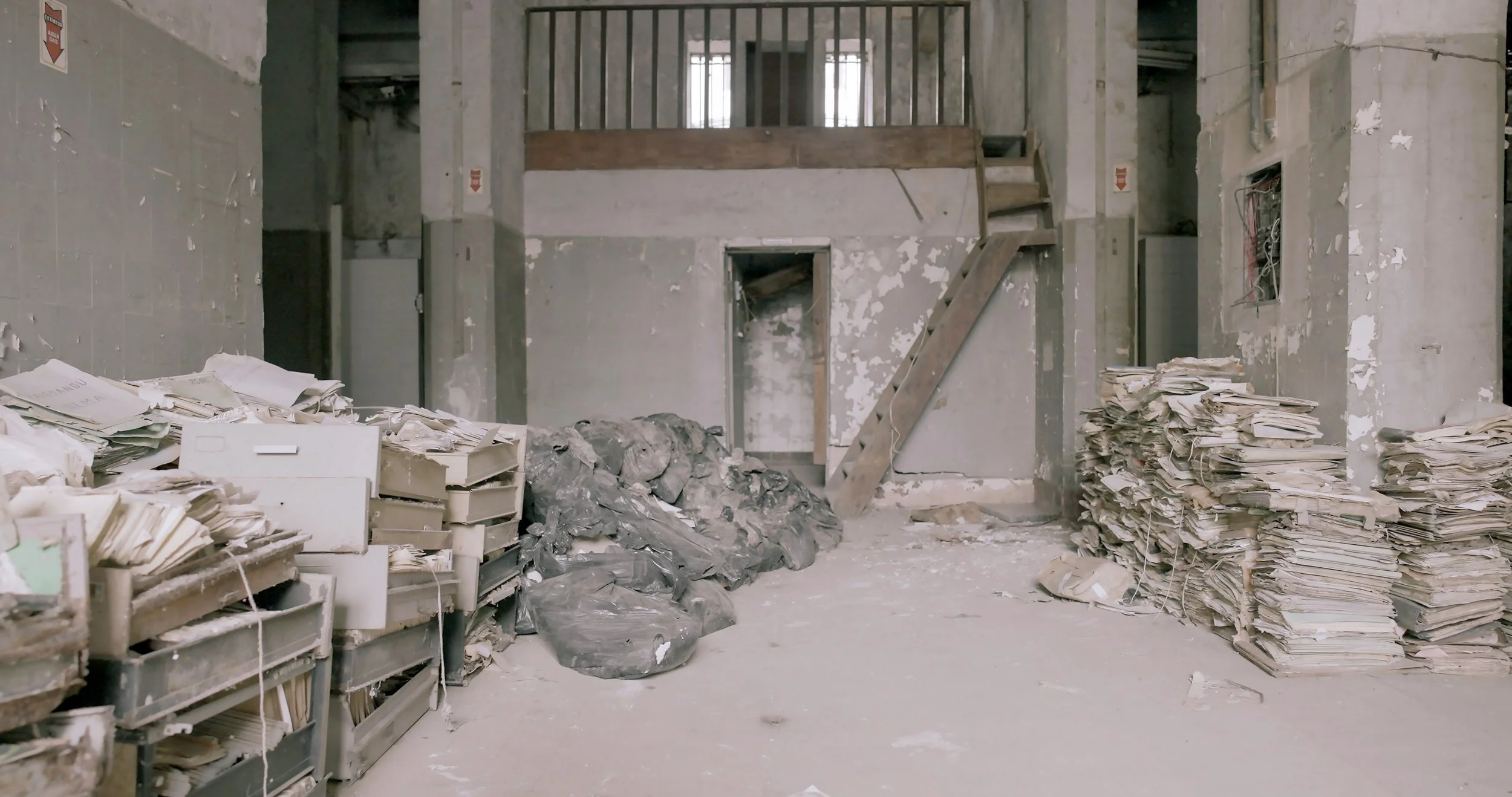
Many Hands Make Light Work takes place in an early 20th-century neoclassical landmark long associated with human rights violations. Originally inaugurated as the Central Police Headquarters, the building served as a notorious site of political repression, including the incarceration of political prisoners and violence against people of the African diaspora. During the Brazilian Military Dictatorship (1964–1985), it operated as the Department of Political and Social Order. (DOPS), one of the regime’s most feared institutions.
The performance is a symbolic collective act: survivors of the dictatorship, including individuals who were imprisoned in that very building, and families affected by State violence passed 500 lbs. of rock salt hand-to-hand, depositing it at the front gate of the now-abandoned DOPS. This action marked the 60th anniversary of the AI-5 decree, the darkest moment of Brazil’s authoritarian period. The participatory gesture was organized in collaboration with human-rights advocates from the Memory, Truth, Justice, Reparations, and Democracy Collectives.
This project also emerged as I confronted my own history—being born in the United States to Brazilian parents living in self-exile during the dictatorship—and considered the rising shadows of authoritarianism in North America.


A HUMAN BODY CONTAINS ABOUT 9oz OF SALT
500 lbs represents AROUND 800 BODIES
Photos by Fabian Alvares
Salt is a polysemic material, carrying multiple meanings—seasoning, preservation, cursing, cleansing, and protection. The inspiration for this action stems from the historical Inconfidência Mineira, a revolt that led to the brutal execution of its leader, Tiradentes. After his hanging, his body was quartered and publicly displayed as a warning, his house demolished, and the land where it stood salted to ensure that nothing would grow there. Tiradentes was made into an example for daring to seek independence from Portuguese rule and envisioning a republic.
In this work, salt is reintroduced as a subversive symbol, reclaiming what was once used for erasure and punishment to instead assert remembrance and resistance. The action materializes a collective demand that the atrocities committed within the DOPS building - a former site of political imprisonment and torture - never be repeated.
Participants engaged with the action on their terms, honoring lost loved ones or confronting the incomprehensible violence they endured within those very walls. The performance became a space for collective catharsis—some spoke the names of the disappeared, others observed in silence, some rejoiced in defiance, while others loudly demanded that such horrors never happen again.
At its core, this action is about physical presence, turning the audience into active participants and performers. Through this shared experience, memory is embodied, and resistance is enacted—not as a passive reflection, but as an undeniable, collective force.
COLLABORATIVE PRACTICES
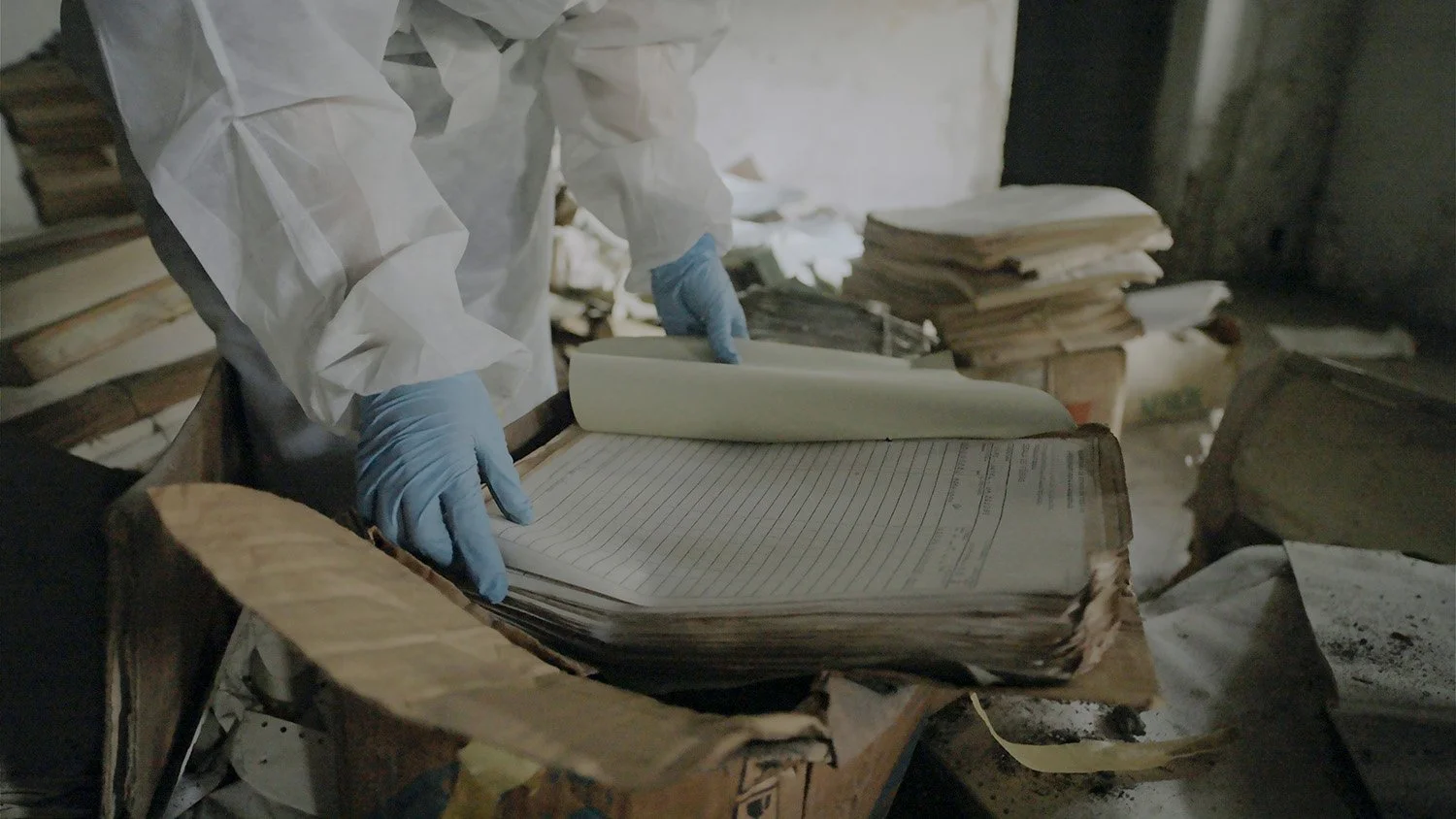
I seek to continue my collaboration with the Memory, Truth, Justice, Reparations, and Democracy Collectives by actively supporting their petition to transform this nefarious site into a Museum for Human Rights. Additionally, I aim to document their tireless efforts to recover, archive, and preserve scores of abandoned documents still housed within the DOPS building, ensuring that these records are not lost to history.
This work is especially urgent given the rise of revisionist conservative narratives that both deny and glorify the military dictatorship and its atrocities. In recent years, former Brazilian president Jair Bolsonaro and his administration openly praised the dictatorship’s violence and attempted to reinstate authoritarian rule, culminating in a failed coup on January 8, 2023.
State violence remains a brutal reality in Brazil, leaving survivors and families of the disappeared without closure, forced to carry the heavy burden of generational trauma. By engaging with these collectives, I hope to amplify their fight for truth and justice while using artistic practice as a tool to confront historical erasure and demand accountability.
The history of Brazil’s military dictatorship and its ongoing political struggles remain largely unknown, overlooked, or deliberately avoided in North America. At this pivotal moment, it is essential to shed light on the history of U.S. interventionism in Latin America, especially as the United States itself faces the rise of authoritarianism under the Trump/Musk administration. The echoes of past regimes serve as urgent warnings, emphasizing the need for historical accountability and vigilance against authoritarian threats—both abroad and at home.


OBA EBA FIAT LUX ET MISERICORDIA
2024-present
Filmed by Bento Marzo
It was an honor to return to the Sculpture Department at the School of Fine Arts at the Federal University of Rio (EBA UFRJ) where I received my BFA in 2004. At the Sculpture Studio, I created silicone and plaster casts that embody the importance of this place in my formation and to generations of Brazilian artists.
The video shot by cinematographer Bento Marzo is a love letter to the public university UFRJ and the iconic modernist architecture of the Ilha do Fundão Campus. The casts created in the Sculpture Studio are the narrative element guiding the viewer through hallways, classrooms, offices, the surrounding landscapes, and larger-than-life modernist architecture.
The Federal University remains vibrant and more active than ever, offering free high-quality education. Despite all the challenges to continuing operational, it flaunts a robust and diverse student body, where people from myriad backgrounds and geographic regions of Rio and the country converge to study, teach, and make art.


